The Fluid Learning News+
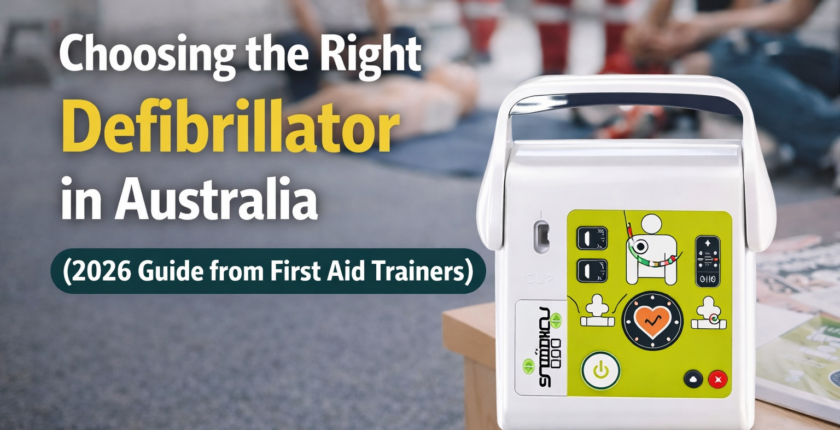
Choosing the Right Defibrillator in Australia (2026 Guide from First Aid Trainers)
Quick Answer
The best defibrillator (AED) is one that is simple to use, reliable, and suitable for the environment it will be used in. From a training perspective, ease of use and clarity of instructions are far more important than advanced features, particularly for workplaces and public settings.
Why Choosing the Right AED Matters
As first aid trainers, we work with thousands of students each year across workplaces, education, and high-risk environments.
👉 One thing is consistent:
In an emergency, people rely on simplicity — not complexity.
What We See in Real Training Scenarios
During training, we regularly see:
- People hesitate when unsure what to do
- Confusion when switching between adult and child modes
- Difficulty remembering steps under pressure
👉 Even in controlled environments, these challenges occur.
👉 In a real emergency, stress levels are significantly higher.
The Most Important Factors When Choosing an AED
1. Ease of Use (Most Important)
From a training perspective:
👉 The simpler the AED, the better.
Look for:
- Clear voice prompts
- Visual instructions
- Minimal steps required
2. Child Compatibility (Often Overlooked)
One of the most common points of confusion in training:
- When to use child pads
- How to switch modes
- Where the pads are stored
👉 This creates hesitation.
Best Practice Recommendation
👉 Choose an AED that:
- Works for both adults and children
- Does not require switching pads or modes
👉 This reduces errors and saves time in an emergency.
3. Reliability
We emphasise in training:
👉 Your AED must work every time
Recent market disruptions and recalls have reinforced the importance of:
- Choosing a trusted manufacturer
- Ensuring ongoing support and availability
4. Suitability for Environment
Different environments require different considerations:
- Workplaces → visibility and accessibility
- Schools → child compatibility
- Remote areas → durability and long-life components
Common Mistakes When Choosing a Defibrillator
From our experience, the most common mistakes are:
❌ Choosing based on price alone
❌ Overcomplicating with unnecessary features
❌ Not considering child use
❌ Not planning for maintenance
👉 These issues often become apparent during training — or worse, in real emergencies.
What We Typically Recommend in Training
Based on our experience delivering first aid training across a wide range of environments, we often recommend AEDs that prioritise simplicity and ease of use.
For many workplaces, schools, and general-use environments:
👉 AEDs such as the Smarty Saver range, including the
Smarty Saver SM2 defibrillator and Smarty Saver SM4 defibrillator, are commonly preferred because they:
- Use the same pads for adults and children
- Provide clear, simple voice instructions
- Require minimal setup or decision-making
- Have low ongoing maintenance requirements
👉 This aligns closely with what we see in training — where simpler devices lead to faster, more confident responses.
Why Simplicity Wins in Real Emergencies
In an emergency:
- The responder may be untrained
- Stress levels are high
- Time is critical
👉 The easier the device is to use, the better the outcome.
Real-World Example from Training
In training sessions:
- When using simpler AEDs, participants act quickly and confidently
- When using more complex devices, hesitation increases
👉 This is why ease of use is one of the most important factors when choosing an AED.
Do You Need Training to Use an AED?
No — AEDs are designed for use by untrained people.
However:
👉 Training significantly improves:
- Confidence
- Speed of response
- Overall effectiveness
How Training and Equipment Work Together
The best outcomes occur when:
👉 Quality training
👉 Simple, reliable equipment
👉 Work together
Choosing an AED for Your Organisation
If you’re selecting an AED:
👉 Consider:
- Who will use it
- Where it will be located
- Whether children may be present
- How it will be maintained
👉 In our experience, choosing a simple, reliable AED is one of the most effective ways to improve real-world outcomes.
Learn More About AEDs
If you’re exploring defibrillators further:
👉 Best Defibrillators in Australia
👉 Can a Defibrillator Be Used on a Child?
👉 Defibrillator Cost Guide
👉 AED Maintenance Guide
👉 Shop Defibrillators
Need First Aid Training or Advice?
At Fluid First Aid, we provide practical, hands-on training designed to prepare you for real-world situations.
👉 Book a First Aid Course
👉 Speak to our team about AED selection
Leave a Reply
You must be logged in to post a comment.